Yes. San Diego OEMs can send forging, casting, CNC machining, and finishing for a metal part in a single RFQ, as long as the drawing package makes clear which features are formed by the primary process and which are finished afterward. One RFQ lets one engineering team review the whole route at once, so tolerances, machining stock, and finish requirements are planned together instead of being split across separate quotes that never see each other.
This guide explains when a single multi-process RFQ makes sense, how the process route is usually built, and what San Diego and Southern California buyers should include so the quote is complete the first time.
Why Multi-Process Parts Are Hard to Quote Separately
Many OEM metal parts are not made by one process. A forged aluminum bracket often needs CNC-machined bores and faces. A die cast housing needs tapped holes, machined sealing surfaces, and a coating. An investment cast stainless part may need a precision bore and passivation.
When each step is quoted by a different shop, three problems show up:
- Machining stock is guessed. The casting or forging quote does not know exactly which faces will be machined, so stock is either too thin (scrap risk) or too thick (extra cycle time).
- Datums do not line up. The forming step and the machining step may locate the part from different surfaces, so tolerances stack up in ways nobody planned.
- Responsibility is split. If a machined feature is out of tolerance, it is hard to tell whether the cause was the casting, the fixture, or the machining.
Putting the whole route in one RFQ removes those hand-off gaps.
How a Single-RFQ Process Route Is Built
1. Choose the primary forming process
Our engineering team first looks at geometry, material, strength needs, and annual volume to decide how the near-net shape should be made:
- Forging for structural and pressure-containing parts that need dense material and good fatigue strength.
- Die casting for thin-wall aluminum or zinc housings at higher volumes.
- Investment casting for complex steel or stainless shapes that would take too much machining from bar.
- CNC machining from bar or plate for prototypes and low volumes, or when tooling is not yet justified.
2. Plan the machined features
Next, the drawing is split into as-formed surfaces and machined features. Bores, threads, sealing faces, and datum surfaces are planned for CNC, and machining stock is added only where it is needed.
3. Add secondary operations and finish
Heat treatment, trimming, deburring, and surface finishing such as anodizing, plating, powder coating, or passivation are sequenced into the route. Finish order matters: for example, threads may need to be masked or chased after coating.
4. Define inspection points
Critical dimensions are checked at the stage where they are created, not only at the end. That way a forming issue is caught before machining time is spent on the part.
When One RFQ Makes the Most Sense
| Situation | Why one RFQ helps |
|---|---|
| Forged or cast blank plus CNC features | Machining stock and datums are planned together |
| Part moving from CNC prototype to cast or forged production | Same team compares both routes for one design |
| Several related parts in one assembly | Shared materials, finishes, and inspection plan |
| Tight finish or coating requirements | Coating thickness is considered in machining tolerances |
| Unclear which process is best | Engineering can recommend a route instead of quoting a guess |
If a part is a simple machined component with no forming step, a standard CNC RFQ is enough. The single-RFQ approach pays off when two or more processes touch the same part.
What San Diego Buyers Should Include in a Multi-Process RFQ
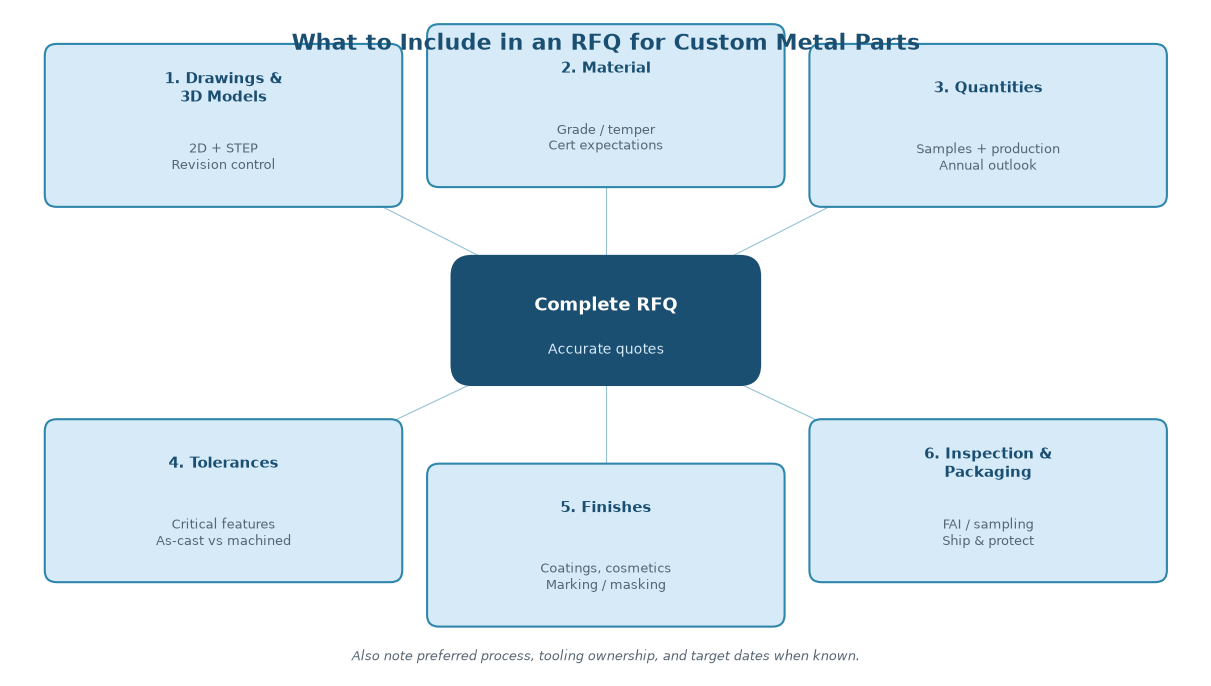
- 3D model and 2D drawing. The model defines shape; the drawing defines tolerances, datums, and notes.
- Material and temper. For example, 6061-T6 aluminum, a specific die casting alloy, or 304 vs 316 stainless.
- Which surfaces are critical. Mark machined features and the datums they locate from.
- Finish and coating. Type, color, thickness range, and masking areas.
- Quantities. Prototype quantity, first production lot, and expected annual volume, since volume drives the forming-process decision.
- Inspection expectations. First article needs, critical-to-function dimensions, and any material documentation the program requires.
- Packaging and delivery location. Especially for parts that must arrive without scratches or coating damage.
For a full checklist, see our guide on what to include in an RFQ for custom metal parts.
Working With Our Team in San Diego
Manufacturing Standard has a San Diego Office and Factory in Poway, CA, and its USA Headquarters Office in Albuquerque, NM. Our engineering, production, and QC teams review forging, casting, machining, and finishing together, so a San Diego OEM can send one drawing package and get one reviewed process route. When your drawings are ready, submit them through the RFQ page.
FAQ
Can I get forging and CNC machining quoted together?
Yes. Send the full drawing with machined features marked. Our team plans the forging shape and the machining steps together so stock and datums match.
Is a single RFQ more expensive than quoting each process separately?
Not necessarily. Planning the route together often avoids extra machining stock, rework, and scrap caused by mismatched hand-offs. The actual cost depends on the part and volume.
What if I am not sure whether my part should be cast, forged, or machined?
Say so in the RFQ and include annual volume and functional requirements. Engineering can compare process options for the same design during review.
Can a CNC prototype later move to die casting or forging?
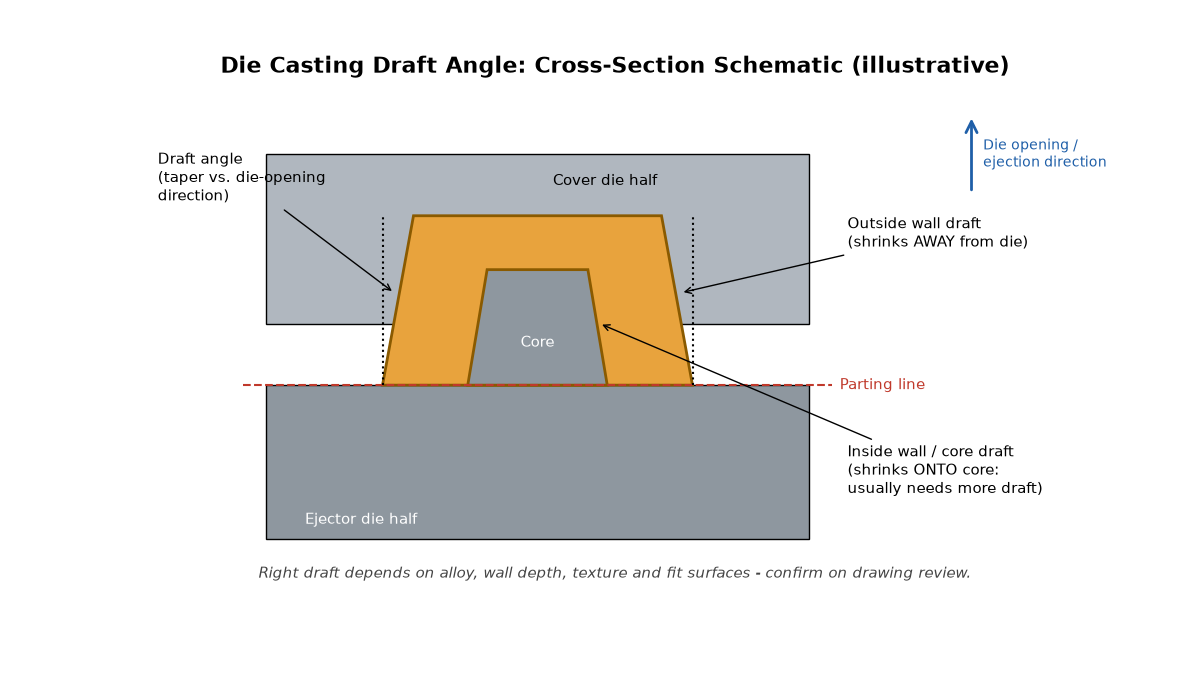
Often, yes. The design may need draft, radii, and wall changes for the production process, which is easier to plan when the same team reviews both stages.
Do you work with OEMs outside San Diego?
Yes. The San Diego office serves Southern California buyers, and RFQs are accepted from OEMs across the United States.
Have a part to quote?
Send us your drawings and requirements and our team will review your RFQ.